
The internet is filled with tools that seem too good to be true. “Free Background Remover,” “Free Face Blur,” “Free Image Enhancer.” We bookmark them, we use them, and we rarely stop to read the 15-page Terms of Service.
But building and maintaining server infrastructure to process heavy image files costs millions of dollars. If a company is offering this service for free, how are they keeping the lights on?
“If you aren’t paying for the product, you are the product. In the AI era, your personal photos are the raw fuel for machine learning engines.”
The Data Scraping Economy
When you upload an image to a free cloud editor, you are often granting the platform a broad license to use that data. While they might deliver the edited photo you asked for, they may also be extracting immense value from the original file:
- Training AI Models: The geometry of the faces in your photos can be used to train proprietary facial recognition or generative AI models.
- Metadata Harvesting: The hidden EXIF data reveals your exact travel patterns, your home address, and the specific device you use.
- Behavioral Profiling: By analyzing the content of your images, companies can build richer profiles for targeted advertising.
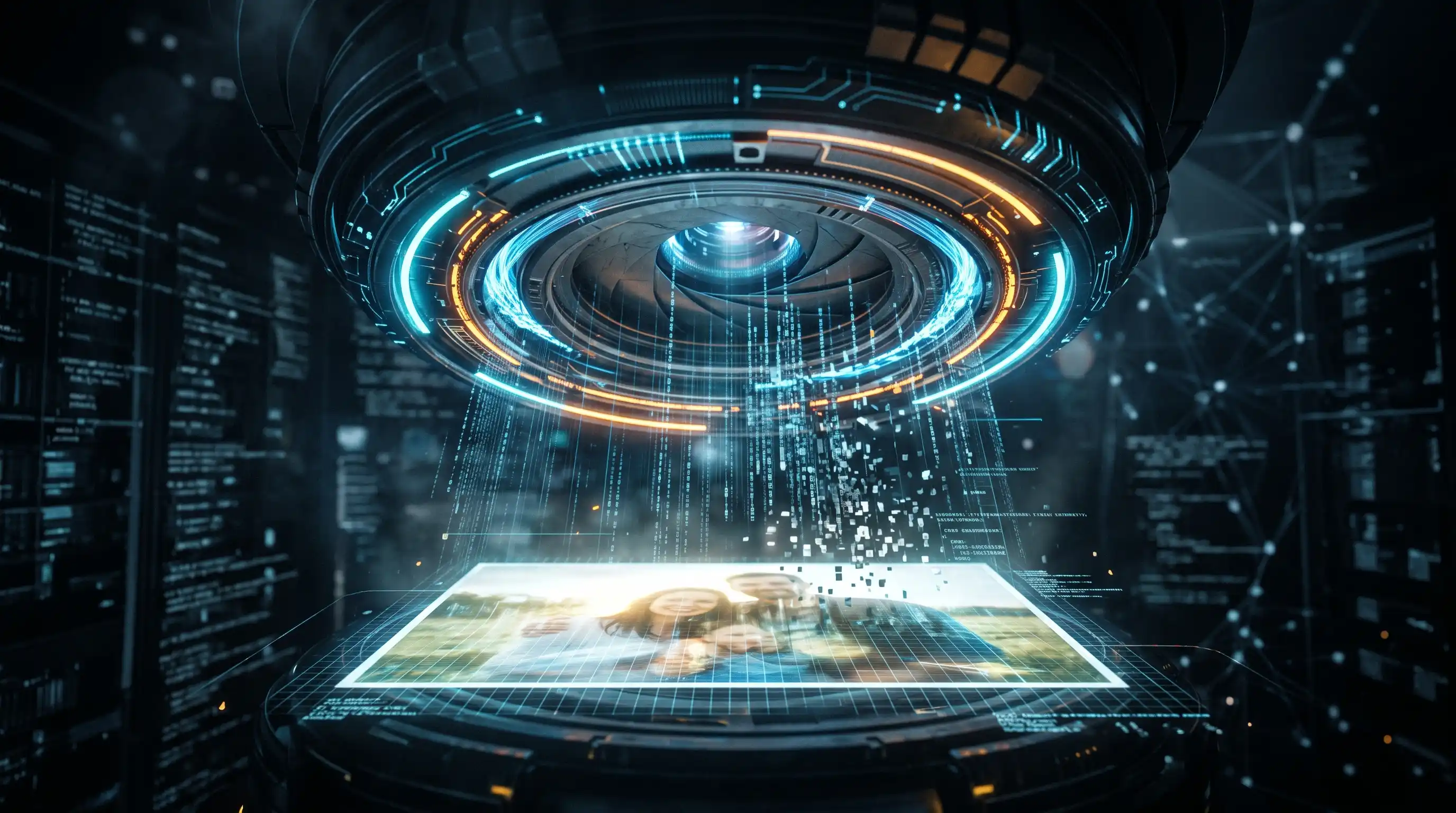
The Illusion of “Deleted After 24 Hours”
Many services proudly display banners claiming that uploads are deleted after 24 hours. While the raw file might be removed from their temporary storage, the data extracted from that file—the facial vectors, the metadata logs, the image labels—often remains permanently in their databases.
You cannot un-train an AI model once it has ingested your face.
Shifting to a Zero-Trust Mindset
The only way to guarantee that your photos are not being weaponized against your privacy is to adopt a Zero-Trust mindset. Stop sending your unedited, sensitive files to remote servers.
Local-first applications run entirely on your own hardware. By utilizing your browser’s WebAssembly capabilities, they perform complex edits—like blurring faces or erasing metadata—without ever requiring an internet connection.
It is time to stop paying for “free” tools with your digital privacy. Take back control, and process your memories locally.